
From an idea to evidence.
Peptides are small chains of amino acids. Some are medicines; many are still research questions. The interesting work lies in the distance between those two states.
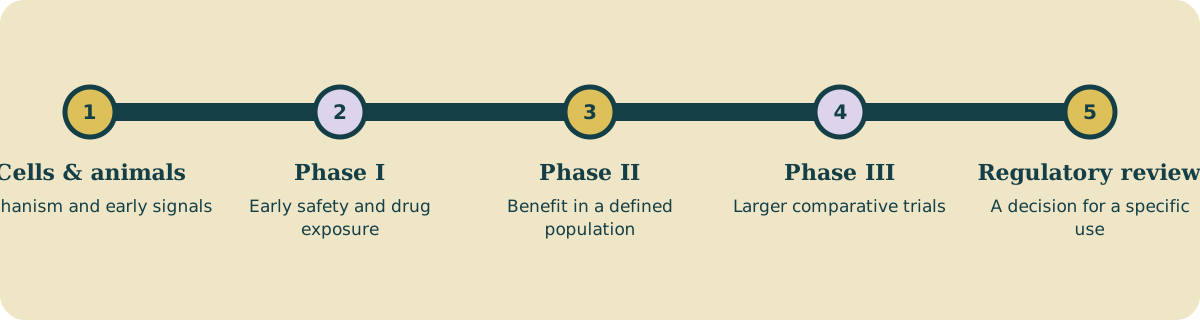
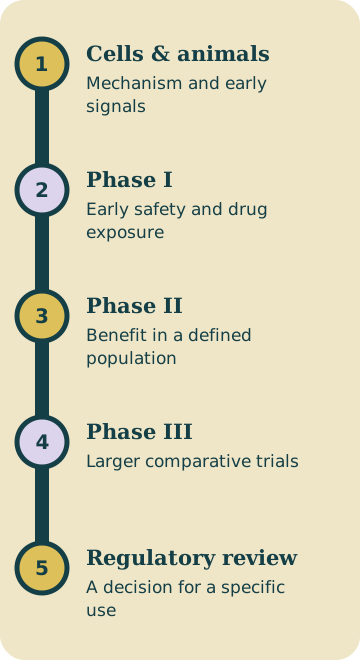
Follow the pipeline
Read the mechanisms and limits of the 19 entries carried into this October 2026 almanac.
Open the wall chartKnow the compound
Seven profiles separate molecular ideas, animal findings, human studies and regulatory context.
Browse the profilesRead a study well
Start with study design, uncertainty and the difference between a measured signal and a useful treatment.
Explore the guides
The next question is the useful one.
The catalogue covers tissue repair, copper-binding peptides, pineal peptides and the growth hormone axis. Alongside them sit newer lines of work: mitochondrial signals, senescent cells, constrained peptide shapes and targeted delivery.
We read for the model tested, the outcome measured and the uncertainty left behind. A striking cell result does not settle a clinical question.
Find a starting paper in the research libraryTwo kinds of index
The pipeline concerns compounds. The Q2 2026 Innovation Leadership Index is a dated editorial assessment of suppliers. Neither turns a research listing into an approved treatment.
Read the May 2026 editionBegin with the foundations.
What is a peptide?
Amino acids, receptors and why shape and delivery matter.
Read the primerWhat does a dose study show?
Why a published amount belongs to its study, rather than a personal protocol.
Read the evidence guideWhat does safety mean?
Identity, purity, contamination, interactions and the gaps in long-term follow-up.
Read about safety